
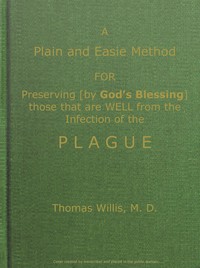
A Plain and Easie Method for Preserving (by God's Blessing) Those That Are Well…
So I stumbled across this book the other day—A Plain and Easie Method for Preserving (by God's Blessing) Those That Are Well… by Dr. Thomas Willis—and I had to share it. This isn't your typical dusty historical text. It's more like a seventeenth-century version of The Anxious Generation, but with more vinegar.
The Story
No plot, no characters (well, except for Dr. Willis himself, who is quite the character). This is a very practical, step-by-step guide written in 1691 for people who were terrified of getting sick—specifically during plague times. Willis breaks it down like this: keep your house clean, burn certain woods (juniper and rosemary), avoid eating raw fruits, wash hands often (yes, even then), and, oh yeah, say your prayers. But what makes it feel like a story is the way he talks to you. He says things like, “Reader, be not afraid; God hath not left you without a remedy.” You can almost hear his voice, kind but urgent, trying to cut through the panic. The book offers a structured schedule: morning doses of vinegar-scented herbs, careful ventilation pointed away from infected areas, and a regimen of food that's almost like a medieval keto diet. His big idea? You can either run away from disease (he calls these people not sensible) or stay and fortify your spirits through air, diet, and faith.
Why You Should Read It
I picked this up because I’m a History Chick, but what hooked me was how agonizingly relatable it feels. Maybe it’s because we just went through our own plague years, but reading Willis's instructions—warming blankets, avoiding crowded churches, eating barley broth—I kept thinking, “Huh, people are basically the same.” There’s something touching about his confidence. He really, really believed these remedies would work. No, he didn’t know about germs. Instead, he thought disease came from bad smells and sin and poor digestion. Yet his unwavering certaintsy gives today's reader a counterintuitive dose of calm: ignorance plus trust can be formidable. The book also sneaks in weird little treasures: like how he advises keeping windows closed during full moon, or that women should use clove oil on their clothes. That stuff makes history smell real.
Final Verdict
Who should pick this up? History nerds, obviously. But also anyone fascinated by how humans handle fear without a Google search. If you loved A Distant Mirror or the journal passages in Year of Wonders, you’ll devour this in one neat hour. Also especially good for readers of healthcare memoirs—yes, like Atul Gawande fans—who like to see how much we've improsved and haven't really changed. Warning: It’s written all long (Long S letters that look like F), so you might have to read some passages out loud to puzzle out words. But that’s part of its damn charm.
This title is part of the public domain archive. It is now common property for all to enjoy.



Sarah Martin
1 year agoIt effectively synthesizes complex ideas into a coherent whole.