
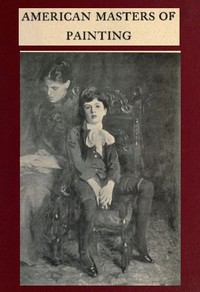
American Masters of Painting by Charles H. Caffin
Let's be honest, the title 'American Masters of Painting' sounds like it could be a dry textbook. But Charles H. Caffin's 1909 book is more like a guided tour from a critic who was right there in the thick of it. He wasn't writing from a distance of a hundred years; he was a witness to American art finding its feet.
The Story
There isn't a plot in the traditional sense, but there is a clear journey. Caffin structures the book as a story of growth. He starts with the foundation—artists like Benjamin West and John Singleton Copley, who set the early standard but whose styles were deeply tied to Europe. Then, he follows the trail to the 19th century, where things get interesting. He talks about the Hudson River School painters like Thomas Cole and Frederic Church, who looked at the vast American wilderness and said, 'This is our subject.' He covers the social realists, the tonalists, and the impressionists who trained abroad but came home to paint American life. The 'story' is the tension between imitation and innovation, between European tradition and a new American vision.
Why You Should Read It
What makes this book special is Caffin's voice. He's not a neutral observer; he has strong opinions about which artists matter and why. Reading him is like listening to a passionate debate. He'll champion an underrated painter or critique a popular one, and he always explains his reasoning in a way that's clear, not stuffy. He connects the art to the spirit of the times—the expansion west, the growth of cities, the changing American identity. You finish the book not just with names and dates, but with a sense of why these paintings were created and what they meant to the people who saw them first.
Final Verdict
This is a perfect read for anyone curious about American history, culture, or art, but who might be intimidated by heavy academic texts. It's for the person who visits a museum and wants to understand the story behind the paintings on the wall. While some of the language is of its time, Caffin's insights are surprisingly fresh. It's a foundational book that helps you see the roots of American visual culture. Just be prepared—you'll probably start Googling the artists he mentions halfway through, wanting to see the paintings for yourself.
Legal analysis indicates this work is in the public domain. You are welcome to share this with anyone.
Emily Davis
11 months agoI wanted to compare this perspective with traditional views, the language used is precise without being overly academic or confusing. I'll be recommending this to my students and colleagues alike.
George Thomas
2 years agoLooking at the bibliography alone, the visual layout and supporting data make the reading experience very smooth. The insights gained here are worth every minute of reading.
Karen Brown
10 months agoThe layout is perfect for tablet and e-reader devices.
Robert Martinez
1 year agoA must-have for graduate-level students in this discipline.








Jennifer Smith
6 months agoThe methodology used in this work is academically sound.