
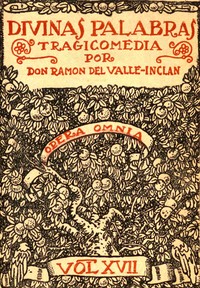
Divinas palabras : Tragicomedia de aldea by Ramón del Valle-Inclán
Ramón del Valle-Inclán's Divinas Palabras isn't your typical play. It drops you into a harsh, superstitious world in rural Galicia, where poverty grinds people down and desperation twists their morals.
The Story
The plot kicks off with a death. Mari-Gaila and her husband inherit her sister's hydrocephalic son, a nonverbal child they call 'the Idiot.' Caring for him is a burden, but when he dies, they make a shocking discovery. In death, the boy can utter 'divine words' – a sacred Latin prayer. Seeing a chance, Mari-Gaila and her lover, a wandering peddler, put the boy's corpse in a cart and tour the villages, charging the faithful to hear these miraculous words. What follows is a chaotic, often darkly comic scramble as greed, lust, and religious fervor collide. The village descends into a kind of madness, with everyone wanting a piece of the profits or the perceived holiness, until it all erupts in a violent and unforgettable climax.
Why You Should Read It
What grabbed me was how alive this world feels, even in its ugliness. Valle-Inclán doesn't judge his characters outright; he shows them in all their flawed, desperate humanity. Mari-Gaila is fascinating – she's tough, sensual, and ruthlessly pragmatic in a society that offers her no good options. The play masterfully blends the sacred and the profane. Is the miracle real, or is it just a clever con played on the gullible? The story forces you to sit with that question. It's also surprisingly funny in a bleak, satirical way, which makes the tragic moments hit even harder.
Final Verdict
This is a perfect pick for readers who love character-driven stories that pack a moral punch. If you enjoyed the gritty realism of Federico García Lorca's rural tragedies or the sharp social satire of someone like Buñuel, you'll find a lot to love here. It's also great for anyone interested in early 20th-century Spanish literature that breaks all the rules. Fair warning: it's raw and doesn't shy away from harsh themes. But if you're ready for a short, intense, and brilliantly written play that will make you think and feel, Divinas Palabras is a masterpiece waiting to be discovered.
Legal analysis indicates this work is in the public domain. Distribute this work to help spread literacy.
Paul Anderson
5 months agoA brilliant read that I finished in one sitting.
Joseph Thomas
3 months agoGood quality content.
Dorothy Scott
1 year agoThe index links actually work, which is rare!
Thomas Smith
2 years agoAfter finishing this book, it manages to explain difficult concepts in plain English. Definitely a 5-star read.




Elizabeth Perez
1 year agoI wanted to compare this perspective with traditional views, the concise summaries at the end of each section are a lifesaver. This is a solid reference for both beginners and experts.