
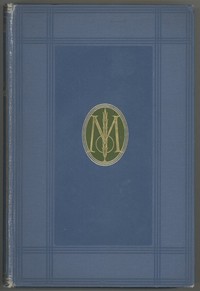
Life and Writings of Maurice Maeterlinck by Jethro Bithell
Jethro Bithell's book is part biography, part guided tour through the mind of Maurice Maeterlinck. It doesn't just tell you he wrote The Blue Bird; it shows you how his life shaped that story. Bithell walks us from Maeterlinck's quiet, lawyer-fearing childhood in Ghent to his sudden fame in Paris. We see how his early obsession with stillness and fate produced plays where characters feel trapped by invisible forces. The book then follows his evolution into a writer of philosophical essays on bees, flowers, and the nature of life itself.
The Story
The 'story' here is the life of a thinker. Bithell lays out Maeterlinck's journey chronologically. We see his breakthrough with Pelléas and Mélisande, his Nobel Prize win, and his flight to America during the World Wars. But the real narrative tension comes from the contrast Bithell highlights. On one side, there's Maeterlinck the public intellectual, writing serene, poetic essays about the intelligence of nature. On the other, there's Maeterlinck the private man, caught in a very public and bitter legal battle with his longtime partner, the actress Georgette Leblanc, and later marrying a much younger woman. Bithell frames this as the central puzzle: how did the poet of silence and inner life manage such a noisy external life?
Why You Should Read It
I loved this because it makes a seemingly distant literary figure feel real. Maeterlinck's ideas about anxiety and the search for meaning feel incredibly modern. Bithell has a knack for explaining complex Symbolist poetry in plain language, connecting the dots between a essay on ants and Maeterlinck's own feelings about society. You get a real sense of a man trying to find cosmic truth while dealing with very earthly problems like fame, money, and love. It's this human portrait, warts and all, that makes his mystical writings more powerful, not less.
Final Verdict
This is perfect for anyone who enjoys literary history but hates dry textbooks. It's for the reader who saw a reference to 'the blue bird of happiness' and wondered where it came from. It's also great for anyone interested in the early 20th century, the Symbolist movement, or just a good story about a complicated, brilliant person. You don't need to have read Maeterlinck to enjoy this—Bithell's engaging style invites you in and makes you want to go read the original works afterward. A truly satisfying deep dive into a forgotten corner of literary history.
This is a copyright-free edition. It is available for public use and education.
Barbara Brown
1 year agoHelped me clear up some confusion on the topic.
Daniel Wright
11 months agoCitation worthy content.
Anthony Wilson
9 months agoHonestly, it creates a vivid world that you simply do not want to leave. Definitely a 5-star read.



George White
1 month agoThe peer-reviewed feel of this content gives me great confidence.