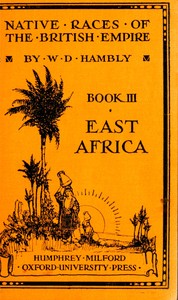
The Native Races of East Africa by Wilfrid D. Hambly
Let's be clear from the start: this isn't a novel. 'The Native Races of East Africa' is a piece of early 20th-century anthropology, written by Wilfrid D. Hambly and published under the auspices of the Smithsonian. But don't let that classification fool you into thinking it's dry. It's a snapshot, a detailed report from a specific moment in time.
The Story
There's no traditional plot. Instead, Hambly acts as a guide, systematically walking the reader through the lives of various East African communities in the 1910s and 1920s. He documents everything: social structure, marriage customs, religious beliefs, housing, crafts, and legal systems. We get chapters on the Maasai, known for their pastoralist culture, the agricultural Kikuyu, and several other groups. The 'story' is the portrait of these societies in their own right, presented with the clinical detail of a scientist but often tinged with the assumptions of his era.
Why You Should Read It
You read this book for the layers. On the surface, it's a fascinating catalog of human culture. But the real value lies in reading between the lines. You see the fingerprints of colonialism in how Hambly frames his questions and categories. His work is a product of its time—sometimes respectful, sometimes paternalistic. This makes it a powerful tool for understanding not just the cultures he studied, but the mindset of those who studied them. It challenges you to separate the observed reality from the observer's bias. When Hambly notes the complex legal systems or intricate ironwork, you get a genuine sense of admiration. When he discusses 'evolutionary stages,' you wince at the outdated framework. That tension is the whole point.
Final Verdict
This is a niche but rewarding read. It's perfect for history buffs, anthropology students, or anyone with a deep interest in East Africa who wants a primary source from the colonial period. It's not a light, easy read—you have to be willing to engage critically with the text. But if you approach it as a historical document rather than absolute truth, it offers an unparalleled, raw look at a world in transition. Pair it with a modern history of the region to see how far our understanding has come. It's less of a storybook and more of a conversation starter with the past.
This book is widely considered to be in the public domain. You are welcome to share this with anyone.