About 206 minutes
The History of England - a Study in Political Evolution — Story, Setting & Ideas
International Affairs
47,333 recorded words. 23 minutes difference from this book's estimate.
View Gutenberg source #6358
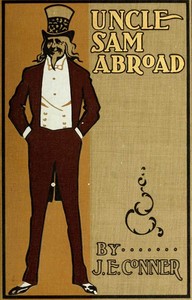
Uncle Sam Abroad — Context and Discussion can be approached with a clearer sense of reading commitment from its source measurements: 42,033 words, 3 hr 3 min estimated reading time, and 8 detected text sections.
The text analysis averages about 16.0 words per sentence, while the detected sections provide another way to judge how the source is divided.
Project Gutenberg metadata also associates the work with “United States -- Politics and government,” connecting these edition facts with the source record’s subject description.
Explore this collection
These alternatives are selected using recorded categories and estimated reading time.
About 206 minutes
International Affairs
47,333 recorded words. 23 minutes difference from this book's estimate.
View Gutenberg source #6358About 140 minutes
International Affairs
32,058 recorded words. 43 minutes difference from this book's estimate.
View Gutenberg source #4779About 140 minutes
International Affairs
32,031 recorded words. 43 minutes difference from this book's estimate.
View Gutenberg source #10333Search stored excerpts and compare books → Choose by your preferences →
Choices use stored catalog measurements. Estimates vary with reading speed. A shared category is a catalog label, not a claim that two books have the same argument or literary quality.
Search reads excerpt text stored with this catalog and links to its associated Gutenberg record. The connection is stored in the site database; this tool does not recheck that every excerpt is word-for-word identical to that external record. Excerpt search does not cover every chapter and does not verify historical publication dates.
Catalog snapshot checked: 2026-09-25. Coverage: 90 public books, 90 available source excerpts.
Read the complete public-domain text at its original source.
Read on Project GutenbergJ. E. Conner frames his 1900 lecture series as a remedy for what he calls the average American's ignorance of Uncle Sam's foreign service. The fictional Professor Loyal of the University of ---- aims to make dry details as interesting as fiction, adopting a university extension plan to stimulate interest. The text, preserved by a shorthand reporter, blends instructional content with a narrative conceit, offering a window into turn-of-the-century American attitudes toward diplomacy, commerce, and national expansion.
Conner's lectures on the diplomatic service reveal a persistent tension between American directness and European finesse. He notes that American diplomats have gained a reputation for going straight at the mark, leaving no doubt as to their government's attitude. Yet he immediately cautions that frankness in diplomacy amounts to a complete disqualification. The ideal diplomat must be all ears and no tongue in business, while in society he must display engaging manners and suave address. This contradiction—prizing bluntness as a national trait while demanding its suppression—runs through the advice. Conner warns that a diplomat's opinion will be regarded as official whether intended or not, so it must be guarded religiously. The manner of a diplomat matters so much that one American ambassador was recalled because of complaints about his bad manners. The excerpts do not reveal which ambassador or country, but the anecdote underscores Conner's emphasis on personal conduct as a tool of statecraft.
A striking procedural detail emerges in the discussion of diplomatic appointments. Before a nomination is made public, the foreign government is privately asked whether the candidate is acceptable. The nominee himself knows nothing of this, saved from the pain of rejection. If the foreign government objects—sometimes for very trifling reasons—the nominee is declared persona non grata (not an agreeable person), and the sending state proceeds to other nominations. Conner emphasizes that the receiving state not only can reject a nominee but also can demand recall at any time if there is well-grounded dissatisfaction. This behind-the-scenes vetting contrasts sharply with the public image of diplomatic appointments. The process highlights the delicate balance between national sovereignty and international courtesy, a theme Conner returns to when he defines the essential attributes of a state: equality, independence, sovereignty, fixed locality, and an organized political society.
While the diplomatic service handles high-level relations, Conner devotes two lectures to the consular service, which he presents as the practical arm of American commerce. The consular officer's duties range from protecting citizens abroad to gathering commercial intelligence. Conner's treatment suggests that consuls, not ambassadors, are the front line of economic expansion. The book's publication in 1900, at the height of post–Spanish-American War debates over imperialism, gives this emphasis a particular edge. The appendix includes a Synopsis of Commercial Treaties table, reinforcing the commercial focus. Conner's lectures aim to equip the average American with knowledge of these institutions, arguing that the growth of foreign relations—politically and commercially—demands greater public understanding. The consular service emerges as a bureaucratic engine for national ambition, less glamorous than diplomacy but arguably more consequential for trade.
Conner's lectures offer a snapshot of American self-perception at a moment of imperial expansion. The tension between a professed national bluntness and the demands of international etiquette, the careful choreography of diplomatic appointments, and the emphasis on consular commerce all point to a country adjusting to a larger global role. Readers should approach the text as a period artifact, noting what Conner takes for granted—the rightness of expansion, the superiority of American methods—and what he leaves out. The shorthand reporter's notes preserve not just facts but a voice: confident, instructional, and occasionally anxious about how the world sees Uncle Sam.
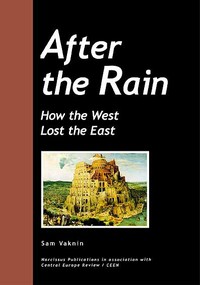
Those 1900 lectures on blunt American diplomacy felt oddly heavy, like a ledger of intentions. I found myself thinking of how that same confidence later met its shadow. That quiet shift—from certainty to puzzlement—is exactly the atmosphere of After the Rain : how the West lost the East — Background and Themes. A familiar ache, somehow, reading them side by side.
Use these questions to collect your thoughts before moving on.