
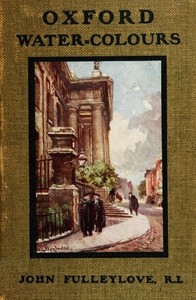
Oxford Water-Colours by John Fulleylove
I picked up this book thinking it would be a nice thing to flip through while eating breakfast, you know, something pretty to look at. But John Fulleylove's Oxford Water-Colours grabbed me harder than I expected. It's just watercolors, right? Slow art. But then I turned the pages, and I actually felt the cool air of those ancient cloisters. I got caught up in the cracks in the walls, the way ivy slept on brick, the quiet drizzle implied in a gray sky.
The Story
So, what's the story here? Well, there isn't a typical plot with characters or battles. The story is the act of Fulleylove stepping through Oxford's gates with a little brush and a tin of water. Between 1890 and some early 1900s, he painted the famous spots—Christ Church, Merton Pond, Magdalen Tower—but he painted them like no one had ever seen them. They're mostly quiet, too empty for a modern day campus. There's no camera flash, no honking cars. It's a silent, ghostly Oxford where the only sound is birds and a distant bell. Fulleylove is telling a story of keeping time: how even when centuries had passed, these quiet lanes looked the same. And somehow, his pencil catches flavor no photo ever could.
Why You Should Read It
I thought, at first, this book is just for art lovers or snobs who want to know which window has the good yellow light. But actually, it's for anyone with a beating heart. There's something earnest and beautiful about seeing somebody that obsessed with a place. Every line peels back time. I kept feeling both desperately sad and delighted that Oxford is still there, and it's still the same. The book made me feel comfort—like a familiar hand touching your face. No clever text expects you to think deep; the pictures do all the talking. It's a personal love letter from a dead man to a city that barely changes. You pine for something you never even had—raindrops in Radcliffe Square at 7pm in some lost year. That's weird power.
Final Verdict
Who is this book for? Honestly? Grab this if you're the kind of person who stops mid-walk to stare at the silhouette of a lamppost. Perfect for daydreamers, nostalgia addicts, and Oxford hopefuls. Art students will drool over his strokes—loose but so filled with skill. But I double it: historians and armchair travelers will also finish feeling peaceful without really knowing why. It's like unsweetened tea on a breezy morning. One last thing: put your phone away while reading. Let the shapes fall into you.
This title is part of the public domain archive. Use this text in your own projects freely.







Christopher Thompson
1 month agoThis was exactly the kind of deep dive I was searching for, the cross-referencing of different chapters makes it a great study tool. I'm glad I chose this over the other alternatives.